01 · The product
What does it do?
A user chooses a leader, chooses X or LinkedIn, and describes an idea and narrative angle. The system returns a platform-ready draft plus a report showing what voice patterns, structural patterns, and source evidence influenced it.
02 · Why it is different
A voice profile is not a prompt summary.
Ordinary voice cloning retrieves old posts and asks a model to imitate them. This platform first measures the leader's recurring micro-patterns and stores them in a structured HVM: the Hierarchical Voice Model. High-performing post structure lives separately in the VKR: the Virality Knowledge Representation. Voice stays dominant; structure is a subtle, independent influence.
The model prompt is therefore the final compiled artifact—not the product's source of truth.
03 · Complete workflow
From public evidence to an evaluated draft.
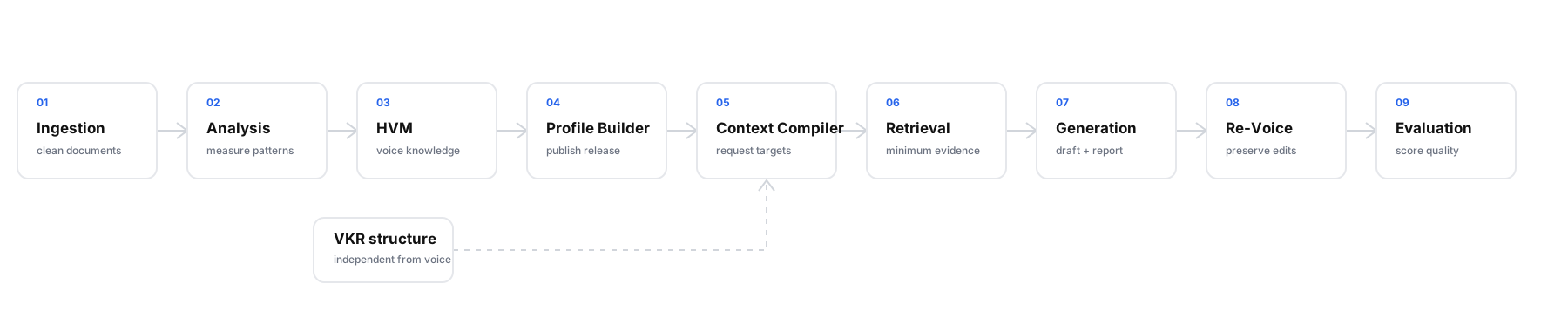
- 01IngestionTurn public source material into clean, traceable documents without flattening writing style.
- 02Voice analysisMeasure lexical, structural, rhetorical, tonal, and platform-specific patterns.
- 03HVM voice profileStore those patterns as evidence-backed features, not a paragraph summary.
- 04Profile BuilderValidate and publish an immutable, inspectable profile release.
- 05Context CompilerTranslate the idea, identity, platform, policies, and active releases into targets.
- 06RetrievalSelect only the voice evidence and structural guidance needed for this request.
- 07GenerationBuild the prompt last, call the configured model, validate the draft, and create a report.
- 08Re-VoiceRestore voice after a human edit while protecting meaning, order, facts, and formatting.
- 09EvaluationScore voice, structure, platform fit, readability, constraints, and evidence use.
04 · Three core components
The assignment boundaries remain visible.
- Voice Profile Engine
- Builds the leader-specific HVM from their public corpus. It captures vocabulary, sentence and paragraph shape, rhetorical habits, tone, and platform differences, with confidence and evidence attached.
- Virality Structure Library
- Builds the independent VKR from performance-oriented examples. It describes hooks, pacing, post shapes, and calls to action without claiming those patterns belong to the leader.
- Draft Generator
- Combines one request-specific voice target and one subtle structure target. It can consume only the compact Retrieval Bundle, never entire profiles or raw corpora.
05 · One request
Three inputs. One accountable result.
1. CEO identity
2. Platform: X or LinkedIn
3. Idea / angle
Internally, the platform pins the active releases, compiles the request, retrieves a bounded evidence bundle, builds the prompt, calls the configured provider, validates the response, and records model, latency, token, evidence, feature, and constraint details in the Generation Report.
Try the generation workflow06 · Human review
Editing is part of the product workflow.
Generate creates the first draft. A human then makes strategic or factual edits. Re-Voice compares the edited text with the original and may strengthen voice only in safe regions. It protects meaning, paragraph order, argument structure, facts, links, formatting, calls to action, and thread boundaries. Evaluation then explains the quality and remaining risks.
07 · Trust boundary
A working profile is not an identity guarantee.
The local Ali Ghodsi and Matei Zaharia development profiles are built from operator-transcribed public posts. They exercise the full pipeline, but incomplete source provenance, timestamps, reuse authority, and independent fidelity review mean they are not production identity claims. Human review remains required before use.
The system also treats engagement patterns as associations, not proof that a format causes virality. Missing evidence, incompatible platforms, unsupported features, and conflicting constraints fail closed before the provider call.